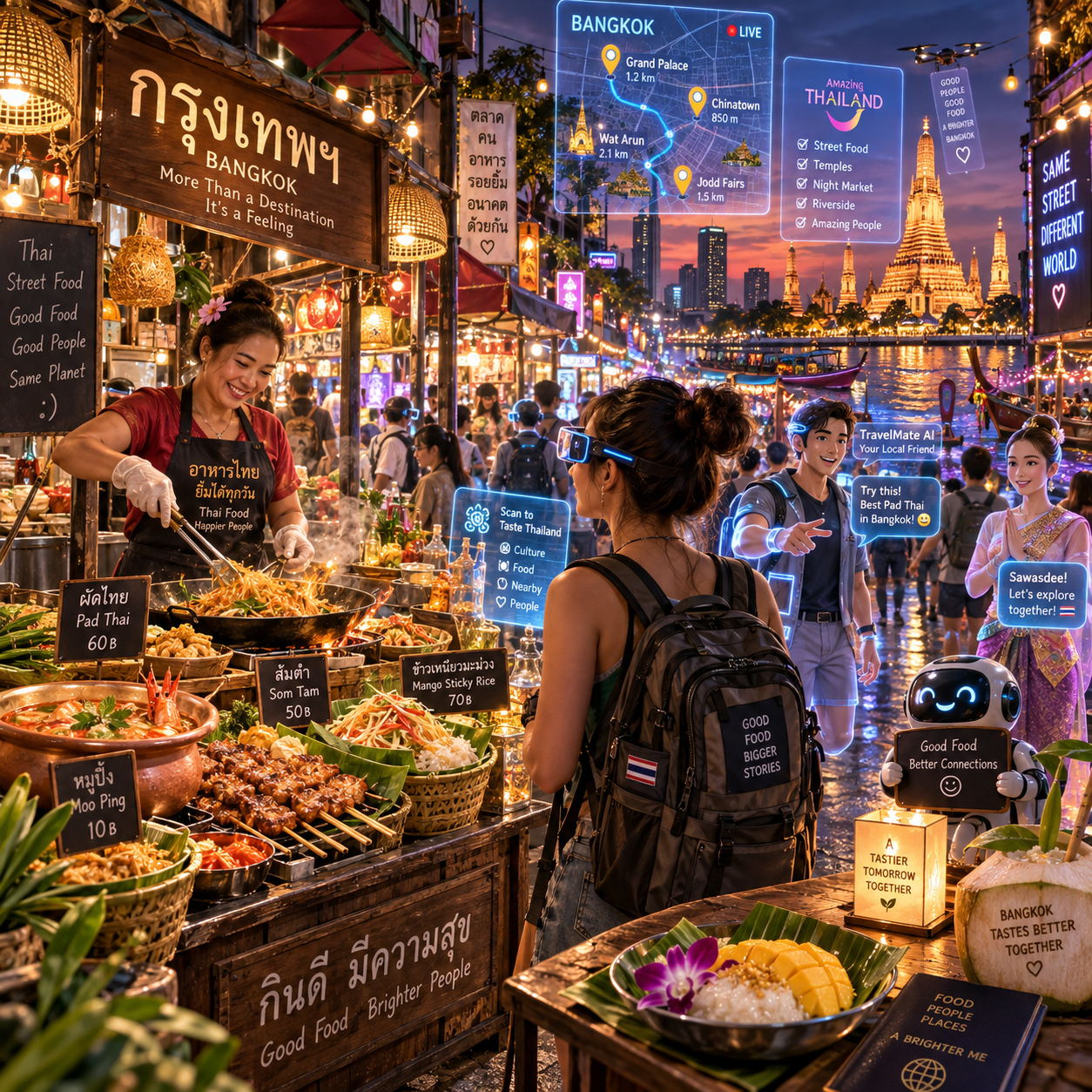
Thailand’s Metaverse Festivals: Reimagining Songkran and Loy Krathong Online
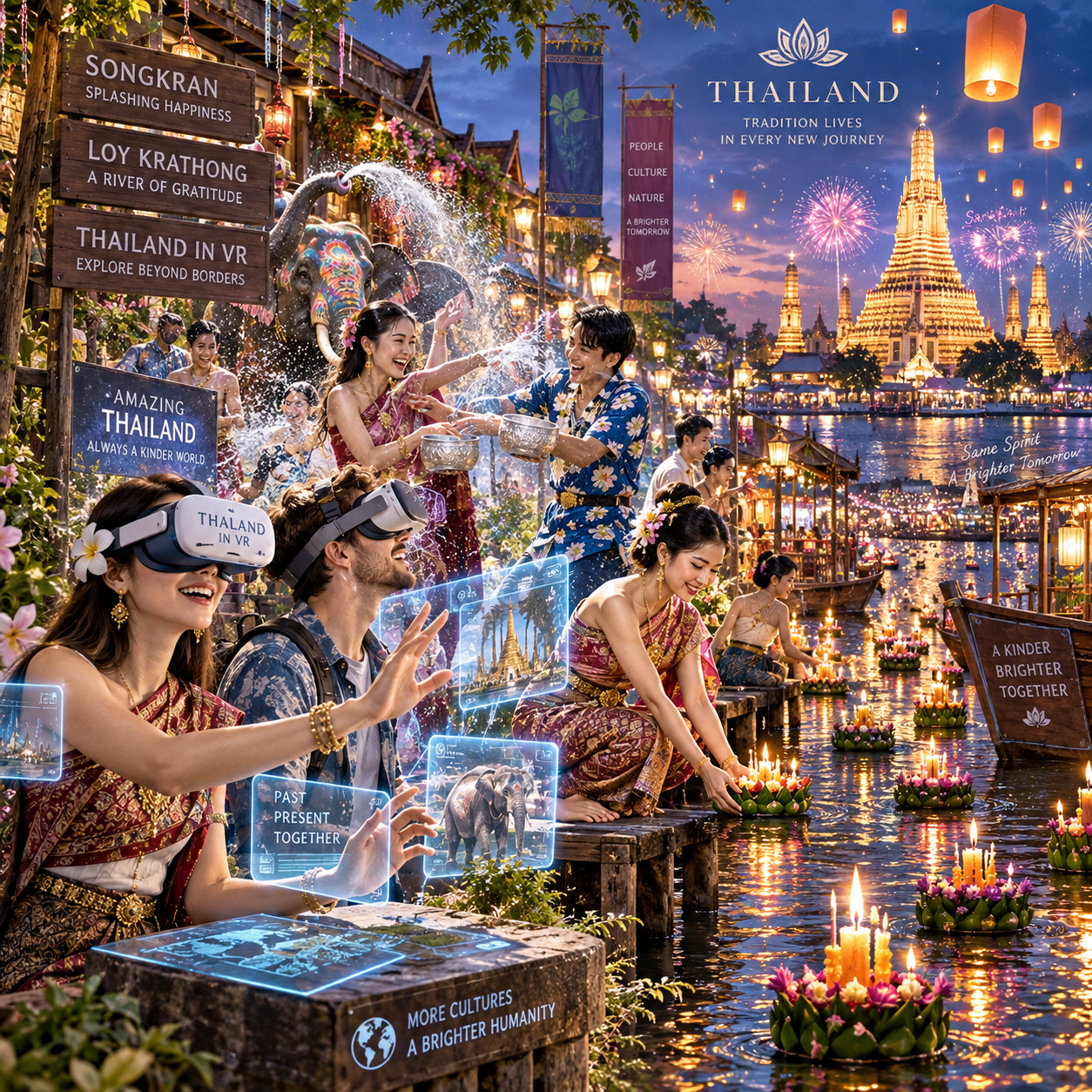
Thailand’s festivals are rooted in shared rituals, family ties, and place. Metaverse tourism could let people explore some of that cultural heritage from afar through virtual reality (VR), augmented reality (AR), and other digital experiences. Songkran and Loy Krathong are especially evocative starting points, though any virtual version should be understood as an interpretation, not a substitute for taking part in Thailand.
Why Bring Thai Festivals Into the Metaverse?
Metaverse festivals could make aspects of Thai celebrations accessible to people who cannot travel, while offering a new way to learn about their traditions. A well-designed digital festival combines exploration and storytelling, rather than treating cultural events as scenery.
Physical distance, cost, mobility needs, and travel timing can all make it difficult to attend a festival in person. Virtual destinations could help visitors explore festival settings, learn key customs, and meet other participants without making the journey. A browser-based experience or AR guide might also be more accessible than a headset-only world.
There is a useful distinction between access and presence. Digital festivals can widen access to information and shared activities; they cannot reproduce the sensory detail of being in a Thai community. A virtual crowd may offer conversation and music, but it cannot fully convey the warmth of the weather, the smell of food, or the relationships that give a local celebration meaning.
These ideas remain possibilities unless a particular event or platform has been announced. Metaverse tourism is an evolving field, so visitors should check whether a digital festival is an active, locally developed project or simply a concept. The strongest experiences would be shaped with Thai cultural practitioners and communities, with clear explanations of what has been recreated and what has been imagined.
Songkran in a Virtual World
A virtual Songkran could translate water-splashing celebrations, music, and communal gathering into playful digital activities, while explaining the festival’s broader meaning. The experience would work best when water play appears alongside cultural context, not as the whole story.
Songkran marks the traditional Thai New Year and is associated with renewal, family, and respect. Water is central to its public celebrations, but the festival also includes customs such as visiting family, paying respect to elders, and making merit. Practices vary by place and household; a digital interpretation should avoid suggesting there is one uniform way to celebrate.
In a virtual environment, visitors might join a water-splashing celebration using avatars, explore a festival street, or dance to music in a shared plaza. VR could create a stronger sense of movement and space, while a desktop version could let people participate without special equipment. With AR, a visitor might view digital decorations or festival explanations through a phone in a real-world setting.
Designers could also offer quieter, more reflective paths through the event. An interactive guide might explain why families gather or how particular customs are practiced, with audio recorded by Thai contributors. That balance matters: a game-like water fight can be fun, but without context it risks reducing Songkran to a splash effect.
Reimagining Loy Krathong as a Digital Experience
A digital Loy Krathong experience could let visitors make a virtual krathong and release it onto an imagined river while learning about the ritual. Its meaning should be explained carefully, since customs and interpretations differ across communities.
Loy Krathong is commonly associated with floating decorated offerings, known as krathong, on water. People may make them from materials such as banana leaves and include flowers, candles, or incense. The act can carry different meanings, including expressions of respect or reflection; explanations should not claim a single motive applies to everyone.
A virtual workshop could introduce the shapes and materials of a krathong, then invite participants to decorate a digital version. Instead of presenting the activity as an exact replica of a ceremony, the experience could describe its limits and explain how real practices vary. Visitors might then release their creation on a virtual river, perhaps choosing a landscape inspired by a specific Thai location rather than a generic fantasy setting.
This approach also offers room to discuss environmental considerations. Physical celebrations can create waste in waterways, and communities may encourage more sustainable materials or practices. A virtual ritual avoids adding an object to a real river, but it should not imply that digital participation carries the same religious, social, or personal significance as an in-person observance.
What Visitors Could See and Do
Visitors could explore virtual festival settings, take part in guided activities, and hear Thai voices explain local customs. The most useful digital festivals would offer a choice of lively social spaces and quieter learning experiences.
Possible activities include:
- Guided cultural walks: Explore a virtual neighborhood or riverside setting with narration about festival history and local life.
- Hands-on workshops: Try a virtual krathong-making activity or learn about Songkran customs through interactive demonstrations.
- Shared celebrations: Meet friends in a digital plaza for music, conversation, and water-play effects designed for avatars.
- AR discovery: Use a phone to reveal festival stories or digital decorations in a compatible location or exhibition.
- Community storytelling: Listen to Thai participants describe what a festival means in their own family or region.
These features should be presented as potential formats, not confirmed offerings. A festival could be built for VR headsets, desktop computers, or mobile devices, and those choices affect how people participate. Headsets may create a stronger sense of immersion, but they cost more and can be uncomfortable for some users. A simple web experience reaches more people, though it may feel less spatial and social.
Good navigation matters, too. Give visitors a clear way to switch between activities, read translations, adjust sound, and leave crowded spaces. A cultural experience should welcome people with different languages, abilities, and levels of familiarity with Thai traditions.
Cultural Care and Authenticity
Cultural care means involving Thai voices, explaining traditions accurately, and showing where a digital interpretation differs from lived practice. Without that work, immersive technology can make a festival look vivid while leaving its meaning unclear.
Authenticity is not a visual effect. A convincing temple, river, or festival costume does not guarantee a respectful representation. Developers should collaborate with Thai historians, artists, cultural organizations, and community members, and compensate contributors for their expertise. They should also identify regional differences and avoid presenting invented details as established custom.
It helps to separate three layers: documented tradition, community interpretation, and creative design. For example, an experience can show a stylized river landscape, but it should say when the setting is fictional. A short note from a local contributor can explain why a custom matters and how it may differ elsewhere.
Design teams should also consider who controls recordings, images, and stories, and how those materials may be reused. Translation deserves the same care as visuals: awkward or overly literal wording can distort a ritual’s meaning. Cultural review should happen throughout production, not only as a final approval step.
Virtual Festivals as a Complement to Travel
Virtual festivals can help people prepare for a trip to Thailand, explore cultural context after returning, or connect with a celebration from home. They complement travel best when they encourage curiosity about real places and communities rather than presenting an online replica as equivalent.
Before a visit, a digital guide might introduce festival etiquette, explain what travelers could encounter, and help them choose a location or activity that fits their interests. Afterward, visitors could revisit stories or share reflections with friends. For people unable to travel, the same tools can provide an accessible point of connection, even though they cannot reproduce the full experience of attending in person.
Use a simple test when evaluating a virtual festival: Does it teach something specific? Are Thai contributors meaningfully involved? Does it clearly distinguish cultural practice from creative simulation? If the answer is yes, the experience can be a thoughtful entry point. If it offers only spectacle, it may entertain without helping visitors understand the traditions behind it.
Songkran and Loy Krathong carry meanings shaped by people, places, and changing practices. Metaverse tourism can open new ways to encounter those stories, but the most responsible digital festival keeps that human context in view and leaves room for the real celebration beyond the screen.