

How Blockchain Technology Enhances Thailand’s Metaverse Tourism
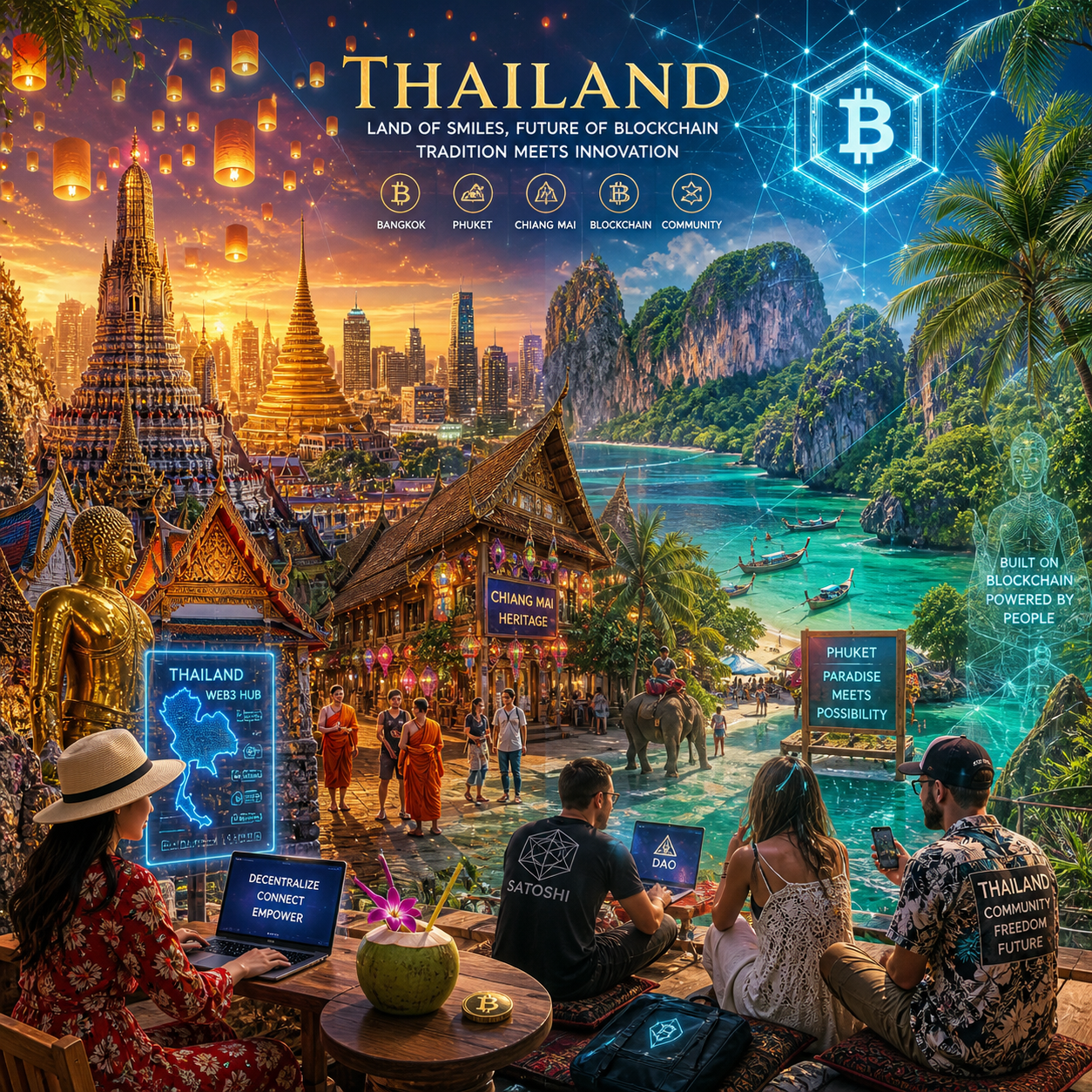
Blockchain technology could give Thailand’s metaverse tourism ecosystem a stronger foundation for trust, ownership, payments, and collaboration. In a virtual visit to a Thai temple, floating market, island, museum, or festival, blockchain can help confirm who owns a digital item, record access rights, automate agreements, and support secure transactions.
These capabilities will not replace physical travel. They can complement it by helping travelers preview destinations, access cultural experiences remotely, collect meaningful digital souvenirs, and connect with Thai tourism businesses before, during, or after a real-world trip.
Understanding Thailand’s Metaverse Tourism Landscape
Thailand’s metaverse tourism combines immersive virtual destinations, interactive storytelling, digital events, and tourism services that visitors can experience through computers, mobile devices, virtual reality headsets, or augmented reality. It extends the travel journey rather than treating virtual tourism as a substitute for visiting Thailand.
A traveler might explore a three-dimensional model of Ayutthaya’s historical park, join a guided virtual walk through Chiang Mai, attend a digital Songkran celebration, or preview a resort in Phuket before booking. Cultural organizations can use virtual experiences to reach schools and international audiences, while attractions can provide access to people who cannot travel because of cost, mobility, health, or distance.
Blockchain becomes relevant when the experience involves multiple parties and valuable digital records. A virtual destination may include a tourism authority, museum, local guide, game studio, hotel, artist, payment provider, and visitor. Without a shared record, it can be difficult to verify tickets, permissions, royalties, or the origin of cultural content.
A useful test is the TRAC framework: does a blockchain feature improve trust, rights, access, or collaboration? If it does none of these, adding a token or wallet may create complexity without improving the visitor experience.
How Blockchain Creates Trust in Virtual Tourism Experiences
Blockchain creates trust in virtual tourism by maintaining a tamper-resistant record of transactions, ownership claims, participation, and permissions across a network. It can reduce dependence on a single platform’s private database, although it cannot guarantee that every piece of uploaded information is truthful.
For example, a virtual museum could issue a blockchain-based attendance record after a visitor completes an exhibition about Thai history. A tourism operator could verify that a digital tour pass came from the official issuer. A creator could prove when a virtual sculpture or reconstructed artifact was published and which license governs its use.
This record is especially useful when virtual tourism experiences move between platforms. A traveler may purchase an event pass in one application and use it in another compatible environment. Interoperability is not automatic, however. Platforms must agree on technical standards, identity rules, metadata, and procedures for correcting inaccurate or harmful content.
Blockchain also has limits. It can prove that a record exists and has not been altered, but it cannot independently prove that a historical reconstruction is accurate or that an image was uploaded by the rightful cultural owner. Human governance, institutional review, and clear provenance remain essential.
Digital Ownership Through NFTs and Collectible Experiences
Non-fungible tokens (NFTs) can represent unique digital rights or items in Thailand’s virtual tourism experiences, such as virtual souvenirs, event passes, destination assets, or access credentials. Their value should come from utility, provenance, and cultural meaning rather than scarcity alone.
A visitor could receive an NFT showing participation in a virtual Loy Krathong exhibition, collect a licensed digital pattern created by a Thai artisan, or unlock a guided augmented-reality story at a heritage site. An NFT might also provide access to a limited workshop, a virtual cooking class, or bonus content from a museum.
Digital ownership needs careful definition. Owning an NFT usually does not automatically grant copyright, trademark rights, commercial permission, or ownership of the real-world object represented. The issuing organization should state whether the holder receives display rights, event access, resale rights, or only a commemorative certificate.
Authenticity matters when cultural heritage is involved. Museums, communities, artists, and rights holders should approve the content, explain its origin, and share revenue transparently. A well-designed collectible can support education and local creators. A poorly governed one can commercialize sacred imagery or turn complex traditions into decorative merchandise.

Smart Contracts for Bookings, Rewards, and Partnerships
Smart contracts are programs that execute agreed rules on a blockchain, making them useful for automated bookings, rewards, revenue sharing, and creator payments in metaverse tourism. They work best when the conditions are clear and the connected data is reliable.
Consider a virtual festival ticket. A smart contract could issue access after payment, send a predefined share to the event organizer and participating artists, and release a refund under stated cancellation conditions. A virtual hotel showcase could reward a user with a digital voucher after completing a tour, while a museum collaboration could distribute licensing revenue among the institution, community representatives, and creators.
Tourism businesses can also use smart contracts for loyalty programs. Instead of keeping points in one closed system, participating attractions might recognize a shared digital credential for visiting a virtual gallery, completing a heritage lesson, and booking an approved physical tour. The commercial rules would need to define expiration, transferability, fraud controls, and consumer support.
Automation brings a trade-off: an incorrect rule can execute quickly and become difficult to reverse. Contracts require security audits, clear legal terms, and a human help channel. They should automate routine administration, not remove accountability from the tourism partners responsible for the experience.
Secure Identity and Payments for Metaverse Travelers
Decentralized identity and blockchain-enabled wallets can help metaverse travelers manage credentials and payments without creating a separate account for every virtual destination. The safest systems minimize the personal information revealed and give users meaningful control over access.
A decentralized identity is a reusable digital credential that can be verified without relying entirely on one platform. In a Thai virtual tourism setting, it might confirm that a visitor is eligible for a student exhibition, has completed a cultural orientation, or holds a valid ticket. Verification could occur without exposing unnecessary details such as a full identity profile.
Digital wallets may store NFTs, access passes, loyalty credentials, and cryptocurrency or other digital payments. They can make cross-border transactions convenient, but wallet recovery, phishing, private-key protection, exchange-rate volatility, and consumer safeguards remain practical concerns. A lost private key should not mean losing access to an important cultural certificate or prepaid experience.
For mainstream adoption, tourism platforms should offer familiar payment options alongside compliant digital payment methods. Clear prices in Thai baht, transparent fees, two-factor authentication, custodial recovery choices, and accessible customer support matter more than forcing every visitor to understand blockchain architecture.
Supporting Thai Culture, Heritage, and Local Tourism Businesses
Blockchain can support Thai culture and local tourism businesses by recording provenance, distributing payments, and extending heritage experiences to global audiences. The strongest projects give communities authority over representation, licensing, and revenue instead of treating culture as a raw content source.
A local artisan could release licensed digital designs connected to a virtual workshop, with the sales terms recorded transparently. A regional guide could host an immersive tour of a lesser-known destination and receive automatic payments when visitors purchase access. A cultural organization could issue verified educational credentials for a virtual heritage program and track authorized uses of its media.
Virtual destinations may also spread demand beyond Thailand’s most visited locations. A digital experience about Nan, Trang, Isan food traditions, or community-based ecotourism can introduce travelers to places they might otherwise overlook. The link to physical tourism should remain responsible: virtual storytelling should set realistic expectations, encourage respectful behavior, and avoid overwhelming fragile sites.
Before launching, stakeholders should answer four questions:
- Who owns or governs the cultural material?
- Who receives payment, and how can the distribution be audited?
- What visitor behavior and cultural context should accompany the experience?
- What happens if the platform closes or the content needs correction?
Challenges and Responsible Adoption
Responsible blockchain adoption in Thailand’s metaverse tourism requires attention to usability, interoperability, privacy, cybersecurity, environmental impact, accessibility, cultural sensitivity, and regulatory uncertainty. A pilot should solve a specific tourism problem before expanding to tokens or complex virtual economies.
Common risks to address
- Usability: Wallet setup and unfamiliar terminology can exclude older travelers, first-time users, and people with limited digital access. Offer conventional sign-in, guided onboarding, and recovery options.
- Privacy: Permanent records can conflict with data-minimization principles. Store as little personal information on-chain as possible and use privacy-preserving verification where appropriate.
- Security: Smart-contract bugs, stolen credentials, fake links, and compromised accounts can cause irreversible losses. Conduct independent testing and provide rapid incident response.
- Interoperability: An NFT or credential may have no practical use outside its original platform. Define open metadata and portability standards before promising cross-platform ownership.
- Environment and cost: Network selection affects energy use, transaction speed, and fees. A lower-energy system may be preferable, but the full infrastructure footprint still requires review.
- Cultural harm: Sacred symbols, community knowledge, and historical sites need consent and context. Commercial permissions should never be assumed from public visibility.
- Regulation: Rules affecting digital assets, payments, consumer protection, privacy, and intellectual property may change. Thai businesses should obtain current legal advice rather than treating a token as outside regulation.
A practical rollout can follow three stages: start with a non-speculative digital certificate or booking record, measure completion rates and support requests, then add ownership or revenue-sharing features only when users understand them. Success should be measured through better access, verified provenance, fairer creator compensation, and smoother collaboration, not token activity.
Frequently Asked Questions
What is blockchain’s role in metaverse tourism?
Blockchain can verify digital ownership, tickets, participation records, identity credentials, and payments across virtual tourism platforms. It supports trust between travelers, tourism businesses, creators, and cultural institutions, but it does not replace governance or accurate content review.
How can NFTs be used in Thailand’s virtual tourism experiences?
NFTs can represent licensed virtual souvenirs, event passes, educational certificates, destination-based collectibles, and access to exclusive experiences. Their terms should clearly explain the rights attached and ensure that cultural content has appropriate permission.
Can blockchain improve virtual travel bookings and payments?
Yes. Smart contracts can automate ticket delivery, refunds, loyalty rewards, and revenue sharing, while wallets can support digital payments. User-friendly interfaces, clear prices, security controls, and legal compliance remain necessary.
What are the main risks of blockchain-based metaverse tourism?
The main risks include phishing, private-key loss, privacy problems, platform lock-in, unclear regulation, transaction fees, inaccessible interfaces, and cultural exploitation. These risks require technical safeguards and community-led governance.
How can Thai tourism businesses adopt blockchain responsibly?
Businesses should begin with a clearly defined problem, consult cultural rights holders, limit personal data collection, select secure and efficient infrastructure, publish transparent terms, and provide non-blockchain access routes. A small pilot with measurable visitor and partner benefits is safer than launching a speculative token economy.
Blockchain can make Thailand’s metaverse tourism more accountable and connected when it quietly improves trust, rights, access, or collaboration. Its success will depend less on flashy digital assets than on thoughtful design: accurate cultural storytelling, fair participation for local communities, secure technology, and experiences that make both virtual and physical tourism more meaningful.