
How Metaverse Tourism Can Preserve Thailand's Cultural Heritage for Future Generations
The Challenge of Preserving Thailand's Cultural Heritage
Thailand's cultural heritage faces a slow but serious erosion — from both natural decay and the pressure of millions of annual visitors. The country holds some of Southeast Asia's most extraordinary historical treasures, yet the very popularity that brings global attention also accelerates their physical deterioration.
At sites like Ayutthaya Historical Park, centuries-old sandstone temples absorb the footfall of over a million tourists each year. Humidity, pollution, and sheer human contact wear away carvings and murals that took generations to create. Some damage is already irreversible.
The threat extends beyond stone and mortar. Thailand's intangible cultural heritage — the Khon masked dance, the Loi Krathong ceremony, traditional Muay Thai rituals, and ancient silk-weaving techniques — depends on living practitioners passing knowledge to younger generations. As urbanization accelerates and younger Thais migrate toward cities and digital economies, many of these traditions are quietly fading. The UNESCO Intangible Cultural Heritage program has recognized this global challenge, but documentation alone cannot guarantee survival.
These twin pressures — physical degradation and cultural discontinuity — create an urgent case for new preservation tools. Metaverse tourism is emerging as one of the most promising.
What Is Metaverse Tourism and How Does It Work?
Metaverse tourism means experiencing real-world destinations through immersive digital environments — virtual spaces where travelers can explore, interact, and learn without physically being present. It draws on three core technologies: virtual reality (VR), augmented reality (AR), and digital twin technology.
VR places users inside a fully simulated environment using a headset. AR overlays digital information onto the physical world through a smartphone or smart glasses. Digital twin technology creates a precise, data-rich 3D replica of a real location — updated in real time and accurate enough to be used for both tourism and structural conservation planning.
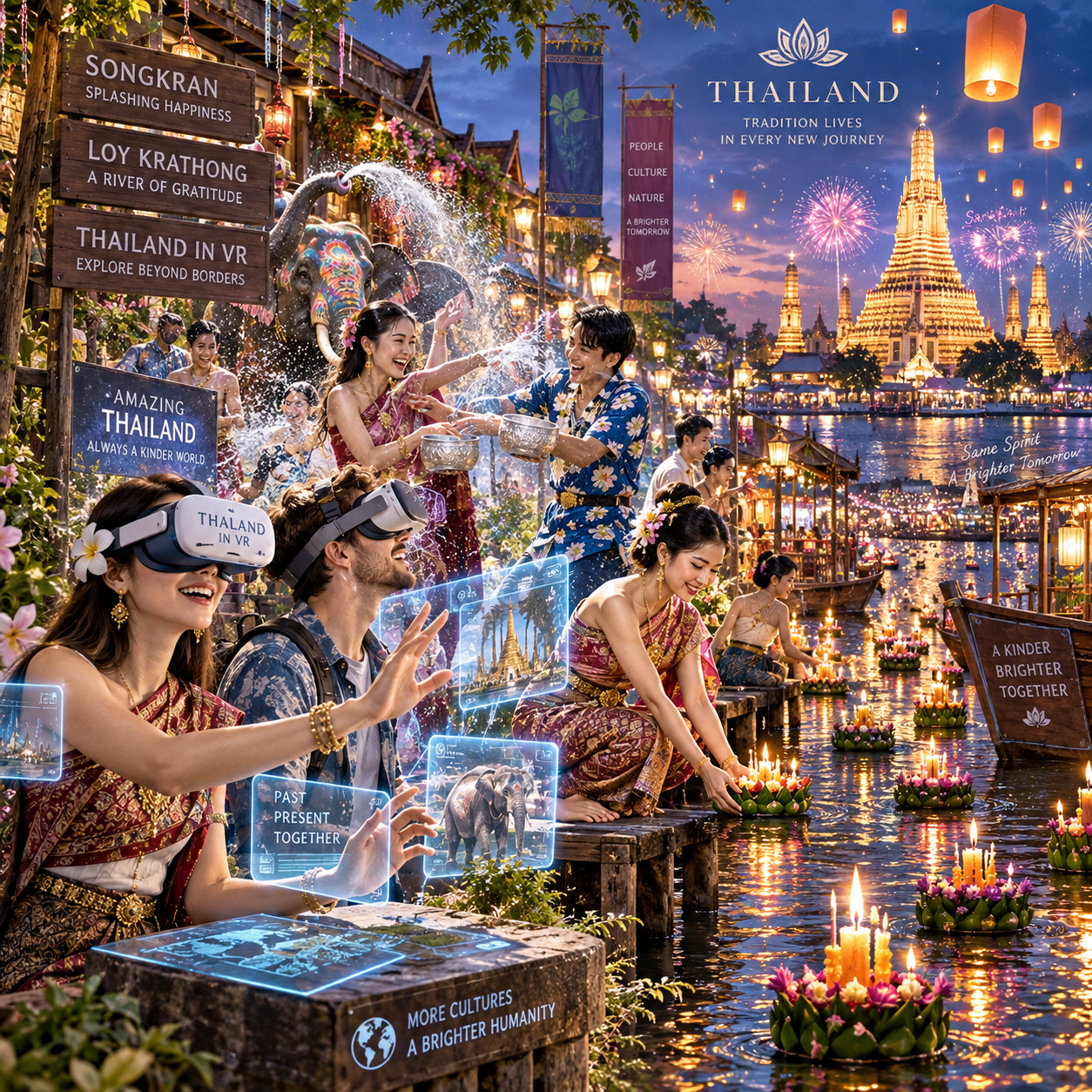
In practice, a traveler in Berlin could put on a VR headset and walk through the inner sanctum of Wat Phra Si Sanphet as it appeared in the 15th century — complete with gilded spires and the sound of monks chanting. A student in São Paulo could attend a virtual Songkran festival and interact with Thai cultural guides in real time. These are not distant possibilities; the underlying technology already exists and is being actively applied to heritage contexts worldwide.
For a general travel audience, the simplest way to think about it: metaverse tourism is like Google Street View, but you're inside the experience, not watching it from outside.
Key Thai Heritage Sites That Could Be Digitally Preserved
Several of Thailand's most iconic and at-risk sites are strong candidates for full virtual recreation through digital twin mapping and immersive VR experiences.

Ayutthaya Historical Park tops the list. The former capital of the Kingdom of Ayutthaya was largely destroyed in 1767 and has been slowly deteriorating ever since. A high-fidelity digital twin of Ayutthaya would not only give global audiences access to this UNESCO World Heritage Site — it would create a permanent record of its current state before further loss occurs.
Sukhothai Historical Park presents a similar opportunity. Often considered the cradle of Thai civilization, Sukhothai's temple complexes spread across a vast area that is difficult to navigate and physically demanding to visit. A metaverse version could make the full site accessible to elderly visitors, people with disabilities, and anyone unable to travel to northern Thailand.
Chiang Mai's ancient walled city, the cave temples of Chiang Rai, and the cliff-face murals of Phu Phra Bat Historical Park in Udon Thani are all candidates where virtual access could reduce direct physical pressure while expanding cultural reach. Some of these sites receive far less international attention than they deserve — a well-designed VR experience could change that overnight.
Protecting Intangible Heritage — Traditions, Ceremonies, and Arts
Physical sites are only half the story. Thailand's living culture — its ceremonies, performing arts, and traditional craftsmanship — may be even harder to preserve than ancient stone, and metaverse tools offer a uniquely powerful solution.
Consider Khon, the classical Thai masked dance-drama that UNESCO added to its Intangible Cultural Heritage list in 2018. A performance involves years of training, elaborate costumes, and deep knowledge of the Ramakien epic. Recording it in 360-degree video or recreating it as an interactive VR experience doesn't just document the art — it creates an immersive encounter that can inspire new audiences and attract students to the craft.
The same logic applies to traditional Thai arts and ceremonies like the Royal Ploughing Ceremony, the Phi Ta Khon ghost festival of Dan Sai, and the intricate process of making Mudmee silk in the northeast. These events happen once a year, in specific locations, and are often inaccessible to international visitors due to timing or remoteness. A metaverse capture makes them available on demand, globally, without diluting their sacred or community significance.
There's a practical preservation angle here too. When master craftspeople demonstrate their techniques in a fully captured VR environment, the knowledge doesn't disappear when they retire. It becomes a living archive — something apprentices can return to again and again, in detail no written manual could replicate.
How Virtual Tourism Supports Real-World Conservation Efforts
Metaverse tourism doesn't compete with physical conservation — it funds and amplifies it. The relationship between virtual engagement and on-the-ground preservation is genuinely symbiotic.
Virtual experiences can be monetized through access fees, premium content, or digital merchandise, with revenue directed toward restoration projects. A visitor who pays a small fee to explore a VR version of Ayutthaya from home may be contributing directly to the physical site's upkeep — a model already being tested at heritage sites in Europe and the Middle East.
Beyond revenue, metaverse tourism builds awareness at scale. Someone who experiences Sukhothai virtually is far more likely to add it to a future travel itinerary — and to arrive with genuine cultural knowledge rather than superficial interest. This creates a more engaged, respectful visitor, which is exactly what sustainable tourism advocates have been calling for.
There's also a pressure-relief function. If a percentage of potential visitors choose the virtual experience — particularly those who might visit fragile sites out of curiosity rather than deep interest — the physical sites absorb less wear. Choosing a virtual experience for casual exploration while reserving physical visits for meaningful, intentional travel is a framework that benefits everyone: the sites, the communities around them, and the travelers themselves.
Thailand's Vision for a Metaverse-Driven Tourism Future
Thailand is not waiting for the metaverse to arrive — it is actively building toward it. The Tourism Authority of Thailand (TAT) has been investing in digital tourism initiatives, and metaverse integration is a growing part of that strategy.
TAT's broader "Amazing Thailand" digital campaigns have already explored virtual and augmented reality content as engagement tools. The next step is moving from promotional snippets to full immersive environments where travelers can genuinely explore Thai culture before and after physical visits.
Thailand's government has also signaled support for digital economy development through its Thailand 4.0 initiative, which positions the country as a regional hub for technology and innovation. Cultural heritage preservation fits naturally within this framework — it's an area where Thailand has unique assets and a compelling reason to lead.
The country's tourism infrastructure, combined with its extraordinary depth of cultural material, gives it a genuine competitive advantage in the global metaverse tourism space. The question is not whether Thailand will develop these experiences, but how quickly and how well.
How Travelers Can Experience Thai Culture in the Metaverse Today
You don't need to wait for a fully realized Thailand metaverse to start exploring. Several immersive experiences are already accessible, and more are launching regularly.
Platforms like Google Arts & Culture offer high-resolution virtual tours of Thai temples and museums. VR travel apps on platforms like Meta Quest include Southeast Asian heritage content. Some Thai cultural organizations have produced 360-degree documentary experiences that place viewers inside festivals and ceremonies.
For travelers planning a physical trip to Thailand, engaging with these virtual experiences beforehand pays real dividends. Arriving at Ayutthaya with prior knowledge of its history, layout, and significance transforms the visit. You're not reading a plaque — you're recognizing places you've already explored.
Here's a simple way to approach it:
- Before your trip: Use VR or 360-degree content to explore sites, understand context, and identify what matters most to you personally.
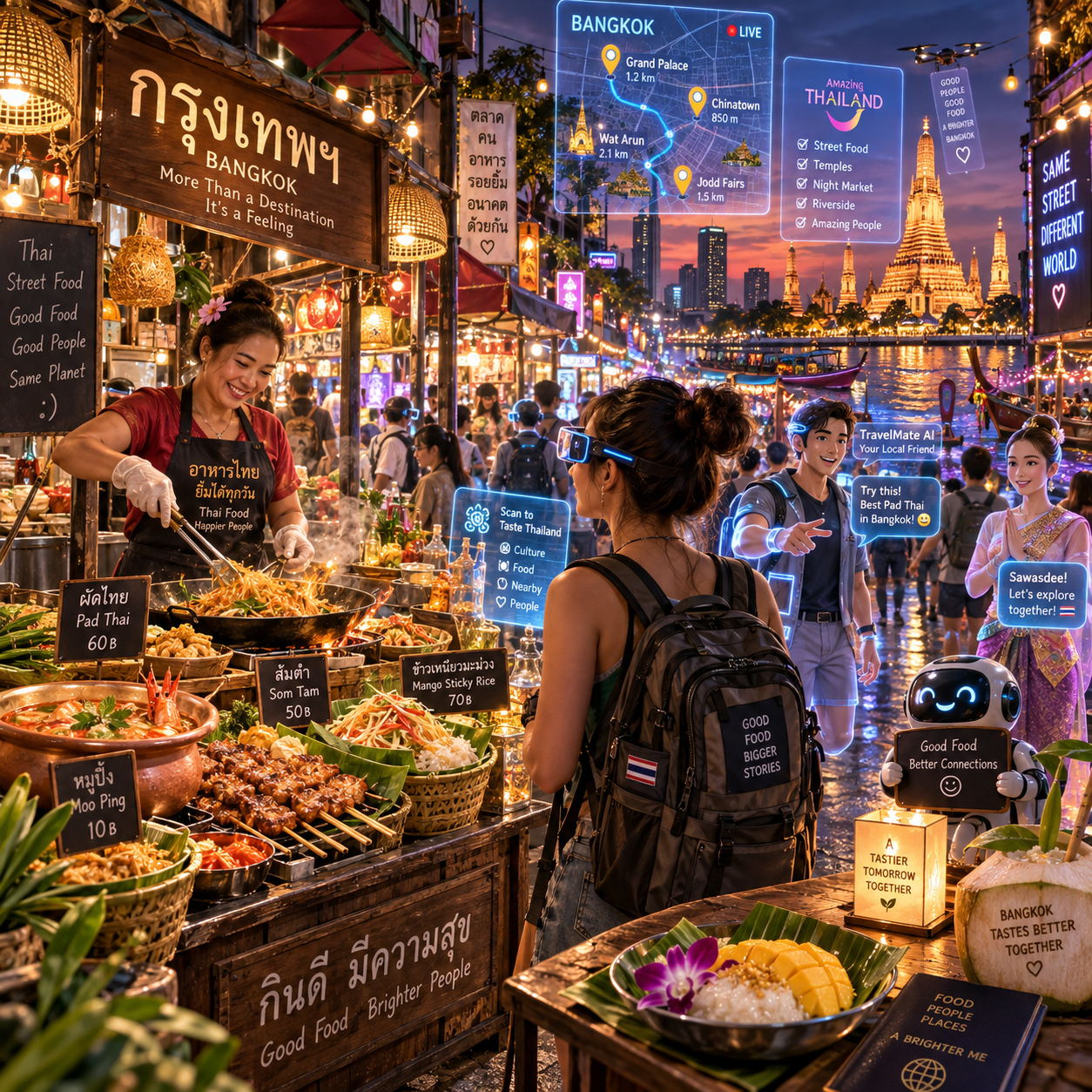
- During your trip: Use AR apps on-site to overlay historical information, reconstructed visuals, or cultural explanations onto what you're seeing.
- After your trip: Revisit virtual experiences to deepen understanding and share them with others who couldn't make the journey.
This three-stage approach treats metaverse tourism not as a shortcut but as a layer of engagement that makes physical travel richer and more meaningful.
Frequently Asked Questions
Can the metaverse fully replace visiting Thailand in person?
No — and it shouldn't try to. The metaverse is a powerful gateway to Thai culture, but the sensory reality of being in Thailand — the heat, the food, the human connection — cannot be replicated digitally. Virtual experiences are best understood as a complement to physical travel, not a substitute.
Which Thai cultural heritage sites are most at risk of being lost?
Sites with significant structural fragility include the laterite temples of Ayutthaya and the cliff murals of Phu Phra Bat. Among intangible heritage, traditional crafts like Mudmee silk weaving and certain regional folk ceremonies face decline as fewer young practitioners continue the traditions.
How does digital preservation help local Thai communities?
Digital preservation creates economic opportunities — from revenue sharing on virtual experiences to increased physical tourism driven by global awareness. It also validates local cultural identity, giving communities a powerful tool to share their heritage on their own terms with a worldwide audience.
Is metaverse tourism in Thailand accessible to everyone globally?
Increasingly, yes. While high-end VR headsets remain expensive, many metaverse tourism experiences are accessible through smartphones and standard computers. As hardware costs fall and internet access expands, the barrier to entry continues to drop.
What technologies are used to create virtual Thai heritage experiences?
The core technologies include photogrammetry (creating 3D models from photographs), LiDAR scanning (precise spatial mapping), 360-degree video capture, and game-engine rendering platforms like Unreal Engine. Together, these tools can recreate heritage environments with extraordinary accuracy and detail.