
Exploring Thailand's Virtual Temples: Your Guide to a Digital Pilgrimage
What Is a Digital Pilgrimage — and Why Thailand?
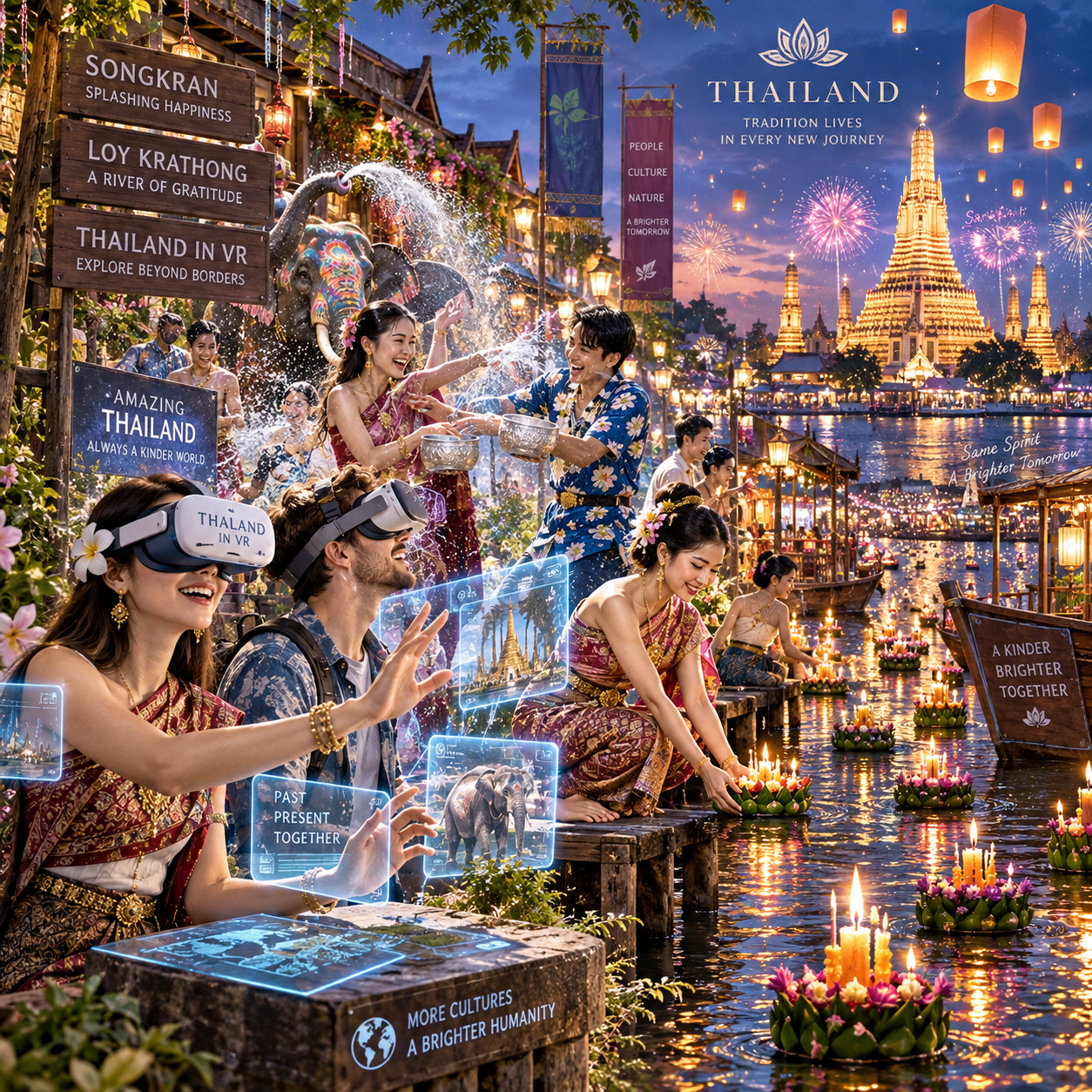
A digital pilgrimage is the practice of visiting sacred or culturally significant sites through immersive virtual environments — experiencing their architecture, symbolism, and spiritual atmosphere without physically traveling there. It is not a replacement for the real journey, but a doorway into one.
Thailand stands out as the ideal setting for this concept. The country's Buddhist heritage spans over seven centuries, producing some of the most visually arresting sacred architecture on earth. Temples like Wat Phra Kaew and Wat Arun carry layers of meaning — in their proportions, their iconography, their orientation toward the rising sun or the sacred Chao Phraya River. That density of meaning translates surprisingly well into digital space.
The Tourism Authority of Thailand (TAT) has been actively exploring metaverse and virtual reality initiatives as part of a broader strategy to make Thai culture accessible to global audiences. For curious travelers, spiritual seekers, or anyone who has ever dreamed of standing beneath a gilded temple spire, the digital pilgrimage offers a compelling first encounter.
Inside Thailand's Metaverse: How Virtual Temples Are Built
Recreating a Thai temple in virtual reality is far more complex than scanning a building and uploading it to a server. The process combines photogrammetry, 3D modeling, and deep cultural research to capture not just the geometry of a structure, but its soul.
Development teams typically work alongside Buddhist scholars, temple custodians, and heritage architects to ensure that sacred proportions and iconographic details are faithfully reproduced. The naga serpents guarding a staircase, the precise angle of a Buddha's hand gesture (mudra), the layered roof lines that symbolize different realms of existence — each element carries meaning that must be preserved even in digital form.
Immersive audio design plays an equally important role. Ambient temple sounds — monks chanting, bells resonating, the soft percussion of rain on tiled roofs — are layered into the experience to engage the visitor on a sensory level that pure visuals cannot achieve alone.
Thailand's metaverse projects draw on a combination of VR headset experiences, browser-based 3D environments, and mobile-accessible platforms, making the digital pilgrimage accessible at multiple levels of technological investment.
The Temples You Can Visit Virtually
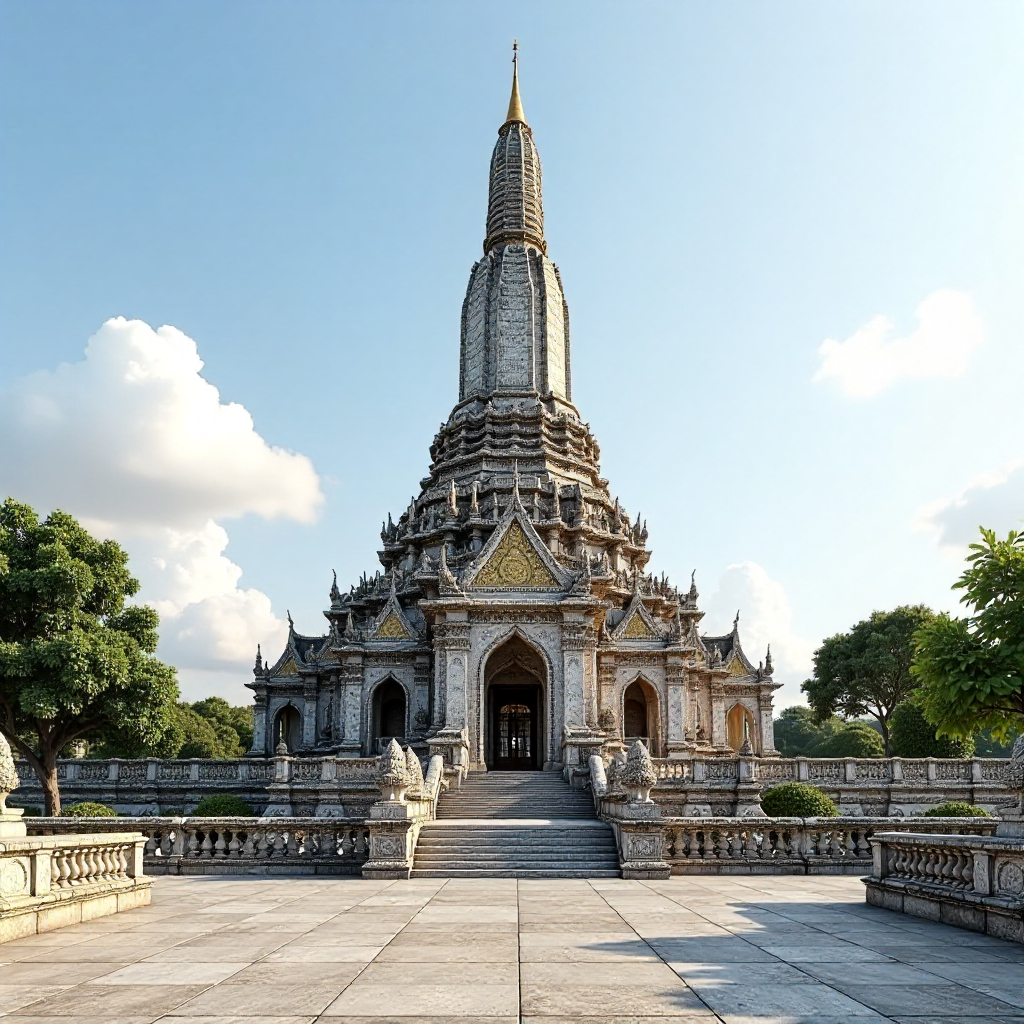
Several of Thailand's most revered temples are at the center of virtual and immersive digital experiences, each offering a distinct character and cultural lesson.
Wat Phra Kaew — Temple of the Emerald Buddha
Wat Phra Kaew, located within the Grand Palace complex in Bangkok, is Thailand's most sacred Buddhist site. The Emerald Buddha — a 66-centimeter jadeite statue seated on a towering golden throne — is the spiritual heart of the kingdom. In virtual form, visitors can explore the surrounding galleries lined with murals depicting the Ramakien epic, a visual narrative that would take hours to absorb in a single physical visit. The digital environment allows for a slower, more contemplative encounter with these scenes.
Wat Arun — Temple of Dawn
Wat Arun rises from the western bank of the Chao Phraya River, its central prang encrusted with millions of fragments of Chinese porcelain that catch the early morning light. Virtually, the experience of climbing its steep symbolic steps — representing the difficulties of reaching enlightenment — can be rendered with striking fidelity. The 360-degree panorama from the upper terrace, with Bangkok spreading in every direction, is one of the most memorable views in Southeast Asia, and virtual formats are beginning to capture it with real emotional impact.
Other Sacred Sites in Development
Beyond Bangkok, temples such as Wat Phra Singh in Chiang Mai and the ancient ruins of Sukhothai Historical Park are subjects of ongoing digital heritage projects. These sites represent the full arc of Thai Buddhist history, from the Sukhothai kingdom's founding in the 13th century to the refined Lanna artistic tradition of the north.
The Spiritual and Cultural Experience — Is It Authentic?
Virtual temple visits carry genuine cultural value, though they work differently from physical pilgrimage. Authenticity in this context is less about physical presence and more about intentional engagement.
Thai Buddhist practice has always emphasized the interior dimension of devotion — the quality of attention brought to a ritual matters as much as its outward form. A virtual visitor who approaches a digital temple with curiosity, respect, and genuine openness to learning is engaging in something meaningful. A physical visitor who rushes through Wat Phra Kaew in fifteen minutes without reading a single plaque is arguably less connected to the experience.
That said, there are real limitations. The scent of incense, the warmth of the sun on white-washed stone, the sight of worshippers placing lotus flowers at a shrine — these sensory and social dimensions of temple life cannot yet be replicated digitally. The virtual pilgrimage is authentic as an introduction and as a cultural education tool, but it points toward the physical journey rather than substituting for it.
Mindfulness practices can be meaningfully integrated into virtual temple visits. Some platforms include guided meditation sessions set within digital temple spaces, drawing on the same principles of focused attention that underpin Buddhist practice itself.
How to Start Your Digital Pilgrimage — Platforms and Access
Accessing virtual Thai temple experiences does not require expensive equipment. Most current offerings are available across a range of devices and access points.
- VR headsets (such as Meta Quest) offer the most immersive experience, with full spatial audio and 360-degree navigation through temple environments.
- Browser-based 3D platforms allow exploration via desktop or laptop without any additional hardware — a practical entry point for most users.
- Mobile apps with augmented reality (AR) features let users overlay temple elements onto their physical environment, creating a hybrid experience.
- The TAT's digital tourism initiatives periodically release virtual experience packages through official tourism portals, often free of charge during promotional periods.
Before your first session, spend a few minutes reading about the temple you plan to visit. Understanding what the spire of Wat Arun symbolizes, or why the Emerald Buddha changes seasonal robes three times a year, transforms a visual tour into something far richer. The UNESCO World Heritage List includes several Thai sites and provides accessible background reading on their historical and cultural significance.
From Screen to Suitcase — Using Virtual Visits to Plan Your Real Trip
A virtual pilgrimage is one of the most practical planning tools available to travelers heading to Thailand. It does something guidebooks cannot: it gives you spatial intuition about a place before you arrive.
After exploring Wat Phra Kaew virtually, you'll know to arrive at the Grand Palace complex early in the morning before the heat and crowds build. You'll have already identified which mural sections of the gallery most interest you, so you can spend time there rather than drifting through the whole circuit without focus. You'll know to dress modestly — shoulders and knees covered — because you've already seen, in the virtual environment, how the space is treated as actively sacred rather than a museum.
Similarly, a virtual visit to Wat Arun will make you want to cross the river to see it from the Bangkok side at sunset, when the porcelain mosaic catches the golden hour light in a way no screen can fully reproduce. That gap — between the excellent digital version and the thing itself — is precisely what motivates travel.
Use virtual temple visits to build a prioritized itinerary. Thailand has over 40,000 Buddhist temples. Knowing which ones resonate with you personally, before you land, means you spend your time in the country on experiences that genuinely matter to you.
The Future of Sacred Tourism in the Thai Metaverse
Thailand's digital tourism vision extends well beyond what is currently available. The TAT has outlined ambitions to develop a comprehensive metaverse tourism ecosystem — one where virtual temple visits, cultural festivals, cooking classes, and heritage tours exist within a connected digital Thailand that travelers can explore year-round.
Emerging developments worth watching include blockchain-verified digital cultural artifacts, which would allow visitors to collect authenticated representations of temple art as part of their pilgrimage experience. These NFT-adjacent concepts are still evolving, but they signal a direction: digital engagement with Thai heritage that carries provenance and meaning, not just aesthetics.
Live-streamed ceremonial events from temples — Makha Bucha, Visakha Bucha, the Royal Kathin ceremony — are another frontier. Imagine attending the lighting of thousands of candles at Wat Phra Kaew in real time, from anywhere in the world, within an immersive spatial audio environment. The technology to do this exists today; the curation and cultural framing are what's being developed.
What Thailand is building is not a substitute for the country itself, but a permanent invitation to it — a living, expanding digital representation of one of the world's great spiritual and artistic traditions, open to anyone with a screen and a sense of curiosity.
Frequently Asked Questions
Are virtual temple visits respectful of Thai Buddhist traditions?
Yes, when approached with genuine curiosity and cultural sensitivity. Thai Buddhist institutions have generally welcomed digital heritage projects as a means of sharing their traditions with a global audience. Respectful engagement — learning the context, observing virtual protocols, treating the space as sacred — is what matters.
Do I need a VR headset to experience Thailand's virtual temples?
No. While a VR headset provides the most immersive experience, most virtual temple platforms are accessible via standard web browsers on desktop or mobile devices. The experience varies in depth, but the cultural content is available without specialized hardware.
Can virtual temple visits count as a spiritual practice?
This depends on your personal tradition and intention. From a Buddhist perspective, the quality of mindful attention matters more than the physical location. Many practitioners find that virtual temple environments support meditation and reflection in meaningful ways.
Is the Thailand metaverse project free to access?
Many TAT-supported virtual experiences are offered free of charge, particularly during tourism promotion campaigns. Some premium immersive experiences developed by private partners may involve a fee. Checking the official TAT tourism portal is the best way to find current offerings.
Which Thai temples are best represented in virtual form?
Wat Phra Kaew and Wat Arun currently have the most developed virtual representations, given their status as Thailand's most internationally recognized sacred sites. Digital projects covering Chiang Mai's Wat Phra Singh and the Sukhothai Historical Park are in various stages of development.